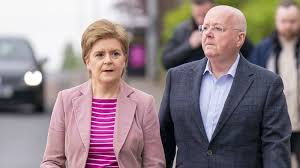
The Chief Executive of the SNP, Peter Murrell, is married to Nicola Sturgeon, First Minister of the Scottish Government. An arrangement unique and universally deprecated in Western democracies since it blurs the division of responsibilities and in consequence can lead to a form of Government detrimental to the well being of the electorate.
In Jan, 2021, in a statement to the Holyrood Harassment Inquiry, Peter Murrell categorically stated that Party policy dictated the policing of complaints within the Party was the responsibility of the Party Executive and it did not share case details with any other organisation unless the complaint highlighted a “clear act of criminality”, and at no time in the Autumn of 2017, did the Party inform any Scottish Government civil servant or special advisor of a complaint by a Party member against a minister of the Government.
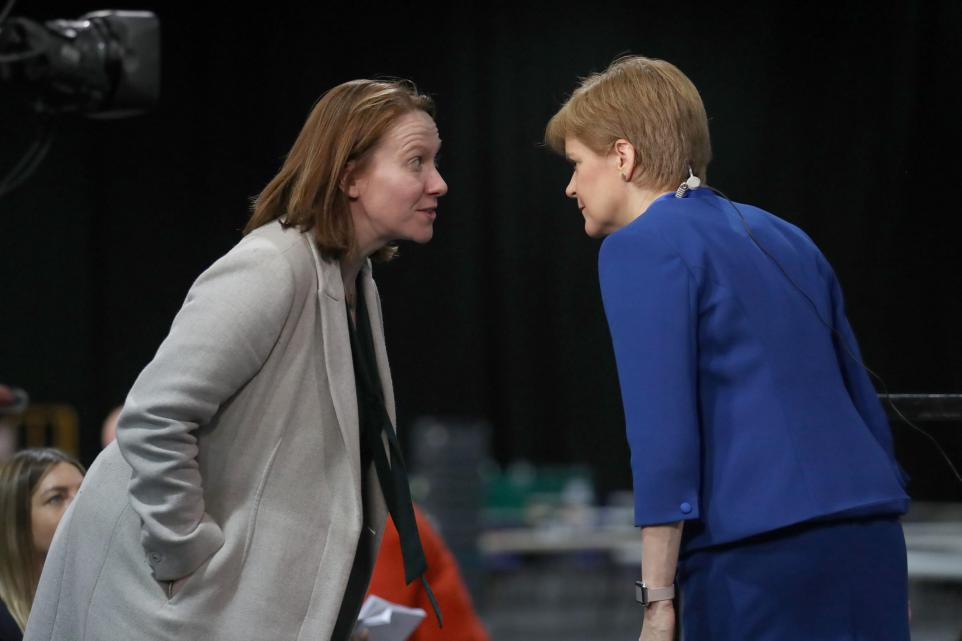
02 Nov, 2017: SNP disciplinary procedures complaints handling and the cynical removal of from office of government minister Mark Macdonald
Mark Macdonald, MSP and Government Minister, was invited to attend a meeting with Deputy First Minister, John Swinney and Liz Lloyd, at which he was informed that there had been “chatter” among Party members about him in relation to the “MeToo” movement.
03 Nov, 2017: Liz Lloyd, Special Advisor and Chief of Staff to the First Minister convened a second meeting with Mark and informed him that a sexual harassment complaint that had been lodged against him by a Party member. She went on to advise him that his position as a minister of the government was no longer tenable and he would need to resign or be sacked. The conduct of Liz Lloyd breeched the ministerial code applicable to Special Advisors and should have resulted in her immediate dismissal. It also begged these questions? But they were not asked!!!
Why was the complaint not dealt with by Peter Murrell, since it had been lodged by a Party member to a Party official and was therefore a Party matter? (See opening paragraph)
Who authorised her actions?
Where did she get her information from?

04 Nov, 2017: Nicola Sturgeon phoned Mark in the afternoon and told him he would be expected to resign from the Government that evening, which he did.
Key points about procedures relevant to Sturgeon’s adherence to the Ministerial Code
The Ministerial Code requires ministers to act with integrity, avoid conflicts of interest, and ensure transparency in government business. Responsibility for upholding the code is vested in the office of the First Minister and ministerial misconduct should be reported directly to the First Minister.
The removal from office on 04 Nov 2017, of Government Minister, Mark MacDonald, raises questions about Sturgeon’s adherence to the Ministerial Code, particularly regarding the conduct of her Special Adviser, Liz Lloyd, and the handling of SNP disciplinary matters versus government processes.
The Special Advisers’ Code of Conduct, requires Special Advisers to act with integrity, avoid conflicts of interest, and not use their position for party political purposes.
They are temporary civil servants bound by the Civil Service Code, which emphasizes impartiality and objectivity, though they are exempt from the merit-based appointment requirement to provide politically aware advice.
Lloyd’s involvement in addressing a complaint lodged by an SNP member against MacDonald, a government minister, blurred the lines between party and government roles.
The involvement of Lloyd, who was informed of the complaint and briefed MacDonald, raises questions about whether she accessed information improperly or acted beyond her remit.
The Ministerial Code requires ministers (including the First Minister) to ensure their Special Advisers adhere to their Code of Conduct.
Sturgeon’s failure to address Lloyd’s actions were a lapse in oversight, breaching the Ministerial Code’s requirement to manage Special Advisers’ conduct.
Murrell, Sturgeon’s husband and SNP Chief Executive, testified to the Holyrood Harassment Inquiry in Jan, 2021, that the SNP did not share complaint details with government officials or Special Advisers unless there was a “clear act of criminality.”
He claimed he was unaware of the MacDonald complaint until 03 Nov 2017, the day before MacDonald’s resignation, during a meeting with Lloyd.
This contradicts suggestions that Lloyd acted on SNP-related information, raising questions about how she obtained details of the complaint and who authorized her to confront MacDonald.
The Ministerial Code states that the First Minister is responsible for approving Special Adviser appointments and can terminate their employment.
Sturgeon’s failure to discipline or dismiss Lloyd for her involvement in Mark MacDonald case, despite her improper conduct, should be seen as a failure to enforce the Special Advisers’ Code, breaching her responsibilities under the Ministerial Code.
Sturgeon’s call to MacDonald on 04 Nov 2017, confirming acceptance of his his resignation suggests she was aware of the complaint and endorsed Lloyd’s actions.
Her statement to the Holyrood inquiry emphasizes that she always ensured government business was conducted through official channels and subject to FOI legislation, but the MacDonald case suggests an overlap between party and government matters, which the Ministerial Code is in place to prevent.
The lack of clarity about how Lloyd accessed the complaint details and why the matter was not handled solely by the SNP (as Murrell claimed was party policy) raises questions about Sturgeon’s adherence to the Code’s requirement to maintain a clear distinction between roles.

 caltonjock
Looking back it really should be astonishing to anyone with eyes to see and ears to listen how these two mediocrities reached the top of their profession.
On the other hand, shit floats.
LikeLike
Aye Duncanio, the twa o’ them widnae hiv been oot o’ place in the bowels o’ the ‘Gardyloo’. Contemptible charlatans freely going about their unabated despicable treachery with no meaningful political challenge is a matter of grave concern!
LikeLike