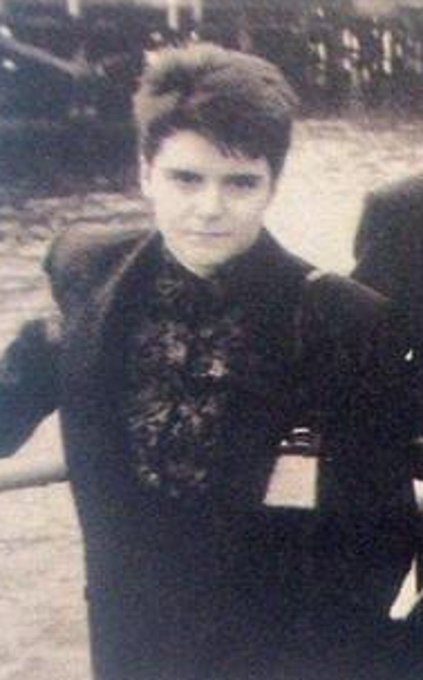
Nicola Sturgeon and Claire Mitchell KC
Nicola Sturgeon and Claire Mitchell established a friendship while studying law at the University of Glasgow School of Law. Both successfully graduated and went on to gainful employment in the legal field. Sturgeon’s career was not successful and she abandoned the profession taking up politics with the SNP.
Mitchell found it hard to gain an opening but persevered and triumphed over adversity when she was appointed a King’s Counsel. She has been instructed in many first-instance trials over the past 10 years and has a particular interest in health and safety cases. She has built up a strong Appeal Court practice, with an emphasis on constitutional, human rights and sentencing questions. She has attended the Privy Council and Supreme Court on several occasions about cases of general public importance to the law of Scotland. At the 2013 Law Awards of Scotland, she received a “Special Recognition Award” for her contribution to legal thinking over the past decade.
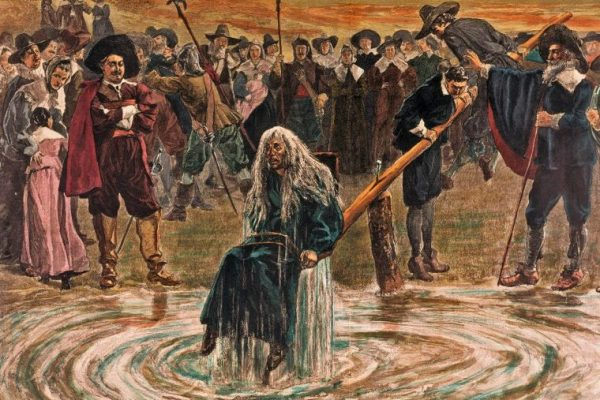
27 Nov 2023: Witches of Scotland Legislation Put on Hold
The witch-hunting craze in Scotland, fueled by the 1563 act, peaked in 1590 and saw approximately 4,000 Scots, mainly women, accused of conspiring with the “Devil.” and being tortured and executed. Various factors, including the widespread use of judicial torture, contributed to the witch hunts, which finally came to an end in 1736 with the repeal of the Witchcraft Act.
SNP MSP Natalie Don, introduced a private member’s bill in 2022 aimed at pardoning all individuals convicted under the Witchcraft Act 1563 and had the support of feminist groups and the Scottish government.
Following Don’s appointment as minister for children in Humza Yousaf’s administration, and voter concerns about different priorities and taxpayer expenditure the bill quietly fell and the Scottish government, indicated no plans to legislate. Supporters of the bill would need to be satisfied with Sturgeon’s apology to the women accused of witchcraft, acknowledging the historic injustice driven by misogyny.
The Scottish Women’s Rights Centre emphasized the importance of public understanding to combat present-day misogyny and applauded the symbolic act of pardon.
Claire Mitchell KC leader of the Witches of Scotland campaign, which received cross-party support for the legislation, is actively seeking a new sponsor for the bill.
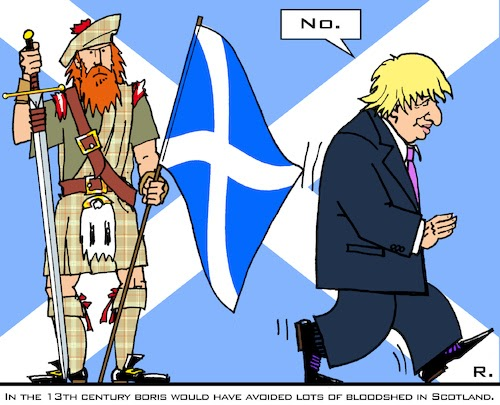
The UK Supreme Court and Indyref2 – UK – V- Scottish Government
Extraction and summary from: (https://www.craigmurray.org.uk/archives/2022/09/dorothy-bain-incompetent-or-corrupt/)
The dispute settled on a case that could allow the Scottish Parliament to legislate for another independence referendum. UK law officers argued that the constitution was reserved for Westminster. The Scottish Government argued that the referendum would be “advisory” and have no legal effect on the union.
In seeking to refer the question of the Scottish Parliament’s competence to hold a referendum to the Supreme Court, the Scottish Government’s Lord Advocate advanced arguments both for and against. But her submission omitted the most powerful and most obvious arguments.
The SNP had to intervene and supplement Bain’s pathetic unionist-biased drivel with a proper brief. Quoting a rule of the court, which states that “any official body or non-governmental organisation seeking to make submissions in the public interest” may apply to intervene the SNP, presented its case to the court through Claire Mitchell KC who argued that – as a public body – it would be “fair, just and reasonable” for the SNP to make arguments to the Court. Her submission raised genuine, powerful and internationally accepted legal arguments which Bain had omitted, including the party’s past manifesto commitments, which were made before the elections which it won. It also argued the right to self-determination was “fundamental and inalienable”.
In his article of 30 July 2022. (https://www.craigmurray.org.uk/archives/2022/07/independence-justice-and-the-unionist-lord-advocate), he described Bain as “spectacularly wrong”, writing that:
“The right to self-determination emerges again in Bain’s conclusion. Here she makes her view crystal clear, that self-determination is part of the “political context” and not a legal matter, it has no legal effect.”
This explains why Bain nowhere mentions self-determination as a legal argument justifying Scotland’s right to hold a referendum.
An explanation: The Independence of a country is not a matter of domestic law it is a matter of international law. The right of the Scottish Parliament to declare Independence may not be restricted by UK domestic law or by purported limitations on the powers of the Scottish Parliament. The legal position is set out very clearly here:
5.5 Consistent with this general approach, international law has not treated the legality of the act of secession under the internal law of the predecessor State as determining the effect of that act on the international plane. In most cases of secession, of course, the predecessor
State”s law will not have been complied with: that is true almost as a matter of definition.
5.6 Nor is compliance with the law of the predecessor State a condition for the declaration of independence to be recognised by third States if other conditions for recognition are fulfilled. The conditions do not include compliance with the internal legal requirements of the predecessor State. Otherwise, the international legality of secession would be
predetermined by the very system of internal law called into question by the circumstances in which the secession is occurring.
5.7 For the same reason, the constitutional authority of the seceding entity to proclaim independence within the predecessor State is not determined as a matter of international law. In most cases, provincial or regional authorities will lack the constitutional authority to secede. The act of secession is not thereby excluded. Moreover, representative
institutions may legitimately act, and seek to reflect the views of their constituents, beyond the scope of already conferred power.
That is a commendably concise and accurate description of the legal position. Of major relevance, it is the legal opinion of the Government of the United Kingdom, as submitted to the International Court of Justice in the Kosovo case. The International Court of Justice endorsed this view, so it is both established law and follows from the stated legal opinion of the British Government that the Scottish Government has the right to declare Independence without the agreement or permission of London and completely irrespective of the London Supreme Court.
The SNP brief argues as Bain failed to argue, that:
“The right to self-determination is a fundamental and inalienable right, among the most fundamental of all rights.”
The SNP brief used many of the same sources in its argument – the UN judgement, the UK submission to the International Court of Justice on Kosovo, and the Supreme Court of Canada on Quebec – that Craig used in his article and has been using to argue the case for the last ten years.
The SNP brief and Claire Mitchell KC did not use the same arguments and even the same sources that Craig used because they were following him, or because he is especially brilliant. The fact is that any experienced diplomat and any public international lawyer would be expected to know exactly the law, arguments and cases which apply.
What Claire Mitchell KC produced for the SNP is precisely what any decent lawyer or any good diplomat would produce to support the case for Scotland’s self-determination.
So why did Lord Advocate Dorothy Bain fail to produce it? Well, there are several possibilities. Dorothy Bain could be a truly, spectacularly, ignorant, stupid and incompetent lawyer. Or, she could have been cleverly and deliberately failing the Scottish Government on whose behalf she was supposed to be acting, which would be an act of dreadful professional wrongdoing. Or she could have been asked by Sturgeon to present a case to the Supreme Court that was sure to fail.
Questions arise. Namely:
The Lord Advocate is a ministerial position in Scotland which makes it a political appointment. Why did Nicola Sturgeon appoint the unionist Dorothy Bain to the position?
At the time of her appointment last year, it was already known that the certification of the Referendum Bill as legal would be a crucial task for the new Lord Advocate.
Nicola Sturgeon’s failure to appoint a nationalist-leaning person provides evidence that she was much more interested in identity politics than in Independence.
Bain’s mission is to guide the justice system through the under noted changes all of which are the highest priority on Sturgeon’s agenda:
1) Abolition of jury trials in sex assault cases
2) Establishment of misogyny as a hate crime and prosecution of sexist speech as a criminal offence
3) Reform of the Gender Recognition Act
4) Abolition of “Not proven” verdict and conforming Scottish system to the English model
5) Continued clampdown prosecutions on “extremist” independence supporters and republicans, using a breach of the peace, harassment, threatening communication, contempt etc etc.
The second question is how it happened that the SNP came to decide to put in an amicus brief to the Supreme Court to try to make up for Bain’s glaring omissions. Here there are reasons to be a little hopeful. Some worms are finally turning. Senior lawyers in the SNP were outraged at Bain’s fake attempt, and there was a near-open revolt among some Westminster MPs. At least 20 were outraged.
It is possibly not chance that the only senior SNP figure who put out the SNP’s brief to the public was Joanna Cherry. It is still her pinned tweet. This revolt caused angst in Casa Murrell. For once Sturgeon was forced to give some ground.
The compromise agreed upon was that Sturgeon accepted that the SNP could submit a brief arguing for the universal right of self-determination, but Sturgeon only agreed on the condition that it was made explicit the SNP was not arguing that Scotland could secede without Westminster’s permission. The SNP brief therefore contained this disclaimer:
2.3. The Intervener emphasises that it is not advocating for a direct exercise or implementation of the right to self-determination in these proceedings.
Notes the “emphasises”. This is daft because it contradicts the entire meaning of the Kosovo and Chagos judgments which it goes on to quote. Nicola Sturgeon’s position remains however that Scotland can only become independent with Westminster agreement.
Sturgeon’s representative on earth is her election agent, constituency minder and long-term confidante Mhairi Hunter who recently spelt the position out very clearly indeed:
This gives an absolute and unequivocal veto to Westminster on Scottish independence and reveals Sturgeon’s “plebiscitary election” as a total fraud.
It explains why Bain submitted her reference to the Supreme Court dismissing Scotland’s international right to self-determination as of no legal force, and why the SNP brief undermines all the sources it quotes by stating it is not making a case for the right to implement self-determination.
The British Establishment will never willingly surrender Scotland’s massive resources. Those who believe Westminster should have a veto, are against Independence, whatever lies they spout.

Scottish COVID Inquiry
A statutory inquiry chaired by Lord Brailsford is investigating the devolved Scottish government’s strategic response to the pandemic.
The Scottish Covid Bereaved (SCB) group, is represented by lead solicitors Aamer Anwar and Dr Claire Mitchell KC who attend all evidence sessions and actively participate in proceedings asking questions, and raising matters directly related to their remit.
One such question was asked of Humza Yousaf by Claire Mitchell KC, who referred to a document which highlighted excessive care home transmission during the pandemic and asked him to identify when he knew a symptomatic transfer of COVID was possible.
Answering Yousaf said it was known as a possibility early on from international academic journals and he believed that testing of those going from hospital into care homes should have started earlier. A damming admission which might yet lead to criminal charges of corporate manslaughter.

 caltonjock
Ms Sturgeons actions could just as easily have been carried out by a member of the Scottish government in the opposition seats. There is nothing there to commend her as the leader of the biggest (for now) independence supporting party.
LikeLiked by 2 people
Dorothy Baines appointment,Murray footes appointment, alarm bells should’ve been ringing long time ago. But I wish that all the defectors to alba had stayed and fought to rest control back.
I’m not criticising alba, but it could take years which we don’t have for them to build enough support.
LikeLiked by 1 person
Calton Jock, setting aside Sturgeon’s dominant character trait (a psychopathic compulsion to pursuing that whihc was to her personal benefit). What in your opinion motivated her to sell our country out?
LikeLike
Angus Robertson was the Svengali figure behind Sturgeon’s rise to prominence. Alex was lumbered with her when he reluctantly replaced the ineffectual John Swinney. Robertson arranged a brainstorm weekend at a hotel attended by Party activists. Alex and Nicola did not attend but agreed to accept recommendations for change brought forward. Robertson arranged professional leadership counselling sessions with Alex and Sturgeon. Both of them accepted a need to change their image. Alex accepted his public persona portrayed him to be a bit of a bully and agreed to soften his character and become a bit more collegiate in his dealings with Party officials and colleagues. Sturgeon was told her hard core feminism and “tomboy” dress mode was a turn off for the public and many Party members and she would need to change her ways. She agreed to all of the recommendations proposed by Robertson. Party finance was made available to her and was subjected to a “Margaret Thatcher” makeover including the purchase of a large wardrobe of political power dressing clothing, voice modulation coaching and regular visits to the beautician/hairdresser so she would be able to be controlled, calm, and polite in her public appearances. She also got married. But Sturgeon’s long held grievances against society dictated her actions when power was handed to her on a plate by Alex Salmond. She was beguiled by powerful feminist forces, including Hilary Clinton and the LBGT lobbyists who persuaded her that their agenda for change should take priority over independence. Achieving that aim required recruitment of activists with the same mind-thought as herself hence the change in recruitment policy away from ability to nepotism. There are many other undesirable characteristics to her character but these might be aired in another forum.
LikeLiked by 2 people