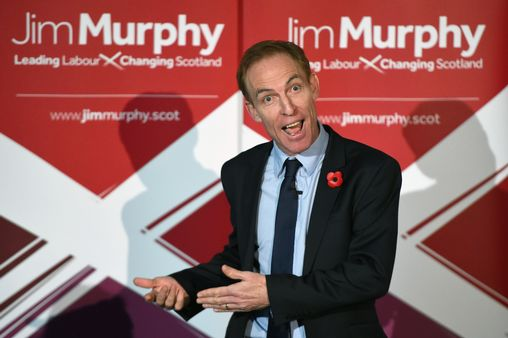
In the 2015 UK general election SNP won 56 of the 59 Scottish constituencies. Labour was just about eliminated as a political force retaining one and losing 40 MP’s. Jim Murphy the so-called leader of the Scottish Labour party resigned and disappeared from the political scene.
Having licked his wounds for a few months Murphy established a political consultancy business “Arden Strategies” in October 2015 with himself the only director and sole employee.
The years 2015-2018 were lean for Murphy in terms of political consultancy contracts when Corbyn was the Labour Party leader. The future was not promising. In one year the agency was valued at less than 4k.
But Murphy’s fortunes showed a marked upturn when the “old boys” of Tony Blair’s “New Labour” faction, financed by all powerful Jewish Zionists declared that Corbyn’s voter friendly “Momentum” supporters and himself were anti- semite and removed him from the Party leadership role in 2019.
Murphy speedily established a friendship with the new Labour Party Leader Keir Starmer promoting his own performance and loyalty to the “New Labour” Party while serving in the Governments of Blair and Brown. Political consultancy contracts flowed thick and fast to “Arden Strategies”.
In 2020 the value of the company exceeded 1.5m a figure doubled by the beginning of 2023.
The employee base is now around 40, growing fast as the next UK GE begins to beckon, with many prominent “New Scottish Labour” figures from the past, including Ken Macintosh and Blair McDougall working with Murphy.
The company first registered in Scotland transferred its business base to London reflecting its progress and references to Murphy and Scottish politics has been removed from the company literature.
“Arden Strategies” is being promoted as an international enterprise promising potential corporate clients information and support from the “inside track” of the Labour Party, (of government).
The UK GE strategy and policies of Labour Party in Scotland are being formulated under the direction of Keir Starmer advised by Murphy and his team, Sarwar has very limited input.
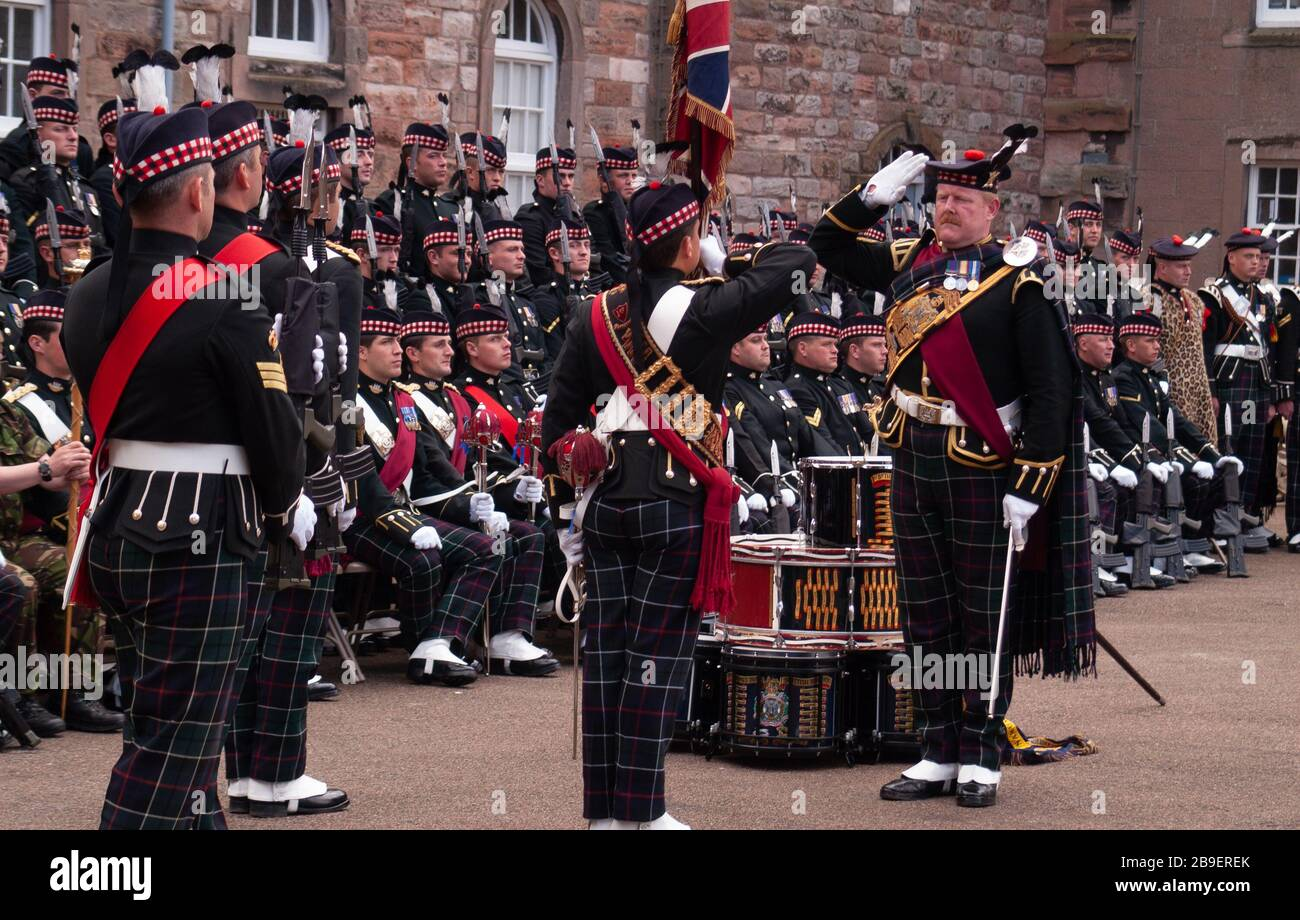
Barracks at Berwick on Tweed home of the Scottish Borderers
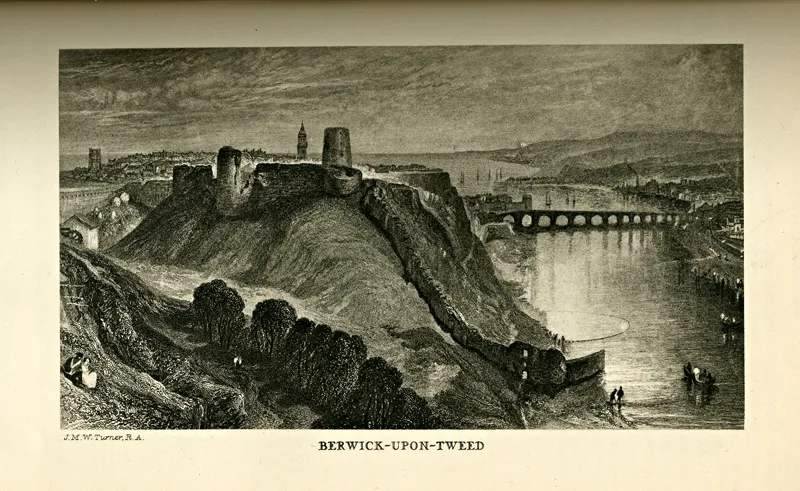
Berwick – Ripped From Scotland By The Bloody Hands of Edward Longshanks and His Successors – But Not Assimilated Into England Until 1974
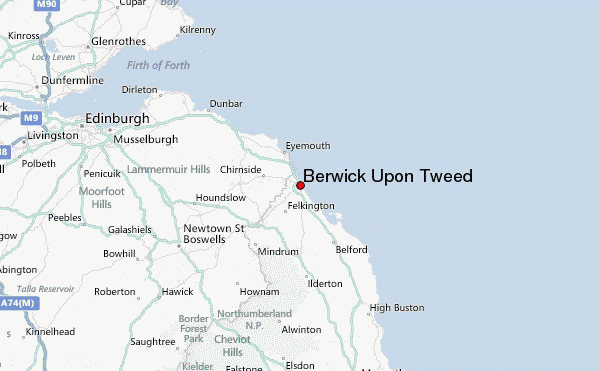
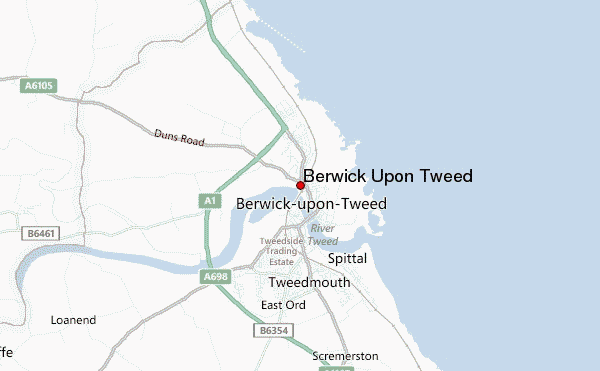
With Westminster being almost 350 miles away from Berwick-upon-Tweed, its residents do not feel connected to English politics. With bagpipes playing and Scottish flags fluttering in the wind, you could be forgiven for thinking you were in Scotland.
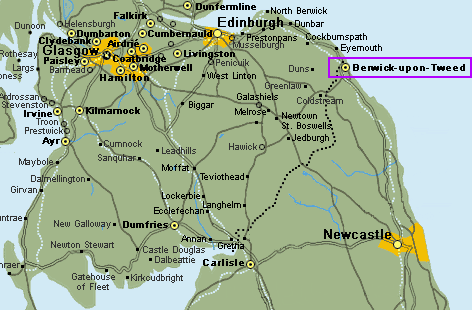
But this is Berwick-upon-Tweed, part of Northumberland – the most northern town in England and just two-and-a-half miles from the Scottish border.
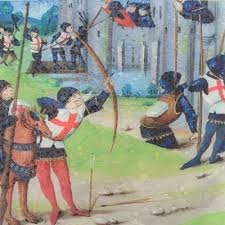
It has a turbulent history – passing between English and Scottish hands at least 13 times, starting with King Edward 1st who slaughtered and/or destroyed just about everyone and everything in the town, (children, adults, livestock and grain) for having the temerity to pledge their allegiance to Scotland.
The killing, raping and plundering went on for days and the streets of Berwick ran red with the blood of the innocents.
With the Scottish Parliament in Edinburgh just over an hour away by road, and Westminster more than six hours by car, do the people feel more Scottish than English?
Well the answer was provided by the people of Berwick in 2008 when ITV carried out an unofficial referendum to find out if residents would prefer their town to be part of Scotland.
The poll saw 1,182 (60%) of voters wished to becoming part of Scotland again with 775 (40%) preferring to stay with the England.
Significantly the poll included residents of Greater Berwick, the 5 mile area south of the Tweed which was added to Berwick as its population expanded from the 15th century.
The Scottish Parliament was convened again in 1999, for the first time since 1707 following a devolution referendum.
And many Berwick Scots watched with aching hearts longing to be to be part of Scotland once again.
One local said:
“As devolution cut its teeth and aged, Berwick people became aware of the differences perhaps more than anyone else in England because [Scotland] is so close and we can see what’s happening just over the border,”
Berwick – Home of The Royal Scots Borderers
The Royal Scots Borderers, 1st Battalion The Royal Regiment of Scotland, defenders of Berwick and freemen of the town marched through Berwick after returning from Afghanistan.
Locals turned out in force to welcome their boys home and many were adamant Berwick should be returned to Scotland.
Berwick residents felt the town was detached from what was happening at Westminster. “They do nothing for us at this end of the country,” one said. “Nothing. This is like the back of beyond as far as London is concerned.”
Another resident born and raised in Berwick, waved a Scottish flag as she watched the parade with her Scottish born husband. When asked if she felt her hometown should be part of Scotland, she said “Berwick is just a lost town:
“My youngest son came out of the Army two years ago and there are no jobs. There is nothing for him, From Parliament in London to Newcastle, that’s where it stops.”
A Brief Recap of Berwick’s History
In Anglo-Saxon times, Berwick-upon-Tweed was part of the Kingdom of Northumbria – an area stretching between York and Edinburgh.
In 1018, following a battle between the Scots and the Northumbrians, it became part of Scotland.
Its importance as a Scottish town grew and, by the Middle Ages, it was the richest port in the country.
In 1296, England’s King Edward I captured Berwick-upon-Tweed, beginning a period of warfare between the two nations which saw the town change hands 13 times.
The last time it changed hands by force was in 1482 when it came under English control.
But this imposed control was never ratified, indeed the Pope declared its control by England was illegal and it remained independent, with legal documents referring to it as being of the Kingdom of England but not within it.
In 1885, it became part of the county of Northumberland for administrative purposes but was only fully integrated into England in 1974.
Significant other events occurring in 1974
1974 and the first of many millions of barrels of oil was delivered from the North Sea to St. Fergus and the true worth of it was hidden from Scotland. The link between both events was not accidental. The Hidden from Scots McCrone Report was circulated within the ranks of very senior Unionist politicians
Unionist’s at Westminster forward planning foresaw the possibility of Scotland gaining independence and limited the damage from losing North Sea oil and gas.
1999 Tony Blair and Donald Dewar agreed a secret plan which transferred Scottish oilfields to England. The sea border takes its line from Berwick, and after the secret deal with Blair and Donald Dewar English sea borders were illegally altered so that England could claim a lot of oil and gas installations it previously never owned.
Scottish border should be 5 miles south of the Tweed estuary
North Sea oil Will Last For 100 Years
Scottish waters will continue to provide oil for another 100 years, twice as long as previous estimates, according to industry analysts.
Dr Richard Pike, a former oil industry consultant and now the chief executive of the Royal Society of Chemistry, said: “Rather than only getting 20 to 30 billion barrels we are probably looking at more than twice that amount.”
His analysis is supported by petroleum experts who believe there are some 300 fields off the coast of Britain still to be explored and tapped properly.
Dr Pike claims that the industry knows the true figures but refuses to release them because of commercial secrecy.
A spokesman for UK Oil and Gas, the offshore industry’s trade association, said: “The current estimates are that there are around 25 billion barrels left.” they’re lying.
Summary
The 1974 arbitrary annexation of Berwick, into Northumberland by Unionist politicians at Westminster and the 1999 secret redrawing of the sea border between Scotland and England were acts of international theft and the Scottish Government should refer the matters to the World court for a ruling forming part of a political campaign to regain Berwick from England’s avaristic Unionists.
Political campaigning should include establishment of a local branch of Scottish Independence supporters and the nomination of Scottish Independence candidates for every electoral office applicable to Berwick, starting with the next UK G.E.
Note: The Labour and Tory Parties maintain branch offices in Scotland, passing them off to unwary Scots as fully autonomous parties responsible for all aspects of policy which is not the case. They are controlled by Unionist politicians at Westminster.


 caltonjock